
Automating Your Warehouse: The Best Used Robots for Palletizing in 2026
Premise
In 2026, the global supply chain landscape has shifted from a “growth at all costs” mentality to a “resilience and ROI” strategy. For Canadian warehouse operators—particularly those in the burgeoning industrial corridor of Southwestern Ontario—the challenge is no longer just finding labour, but finding sustainable ways to scale. Automating the end-of-line process through palletizing remains the highest-impact intervention a facility can make. By leveraging high-quality used robots, companies can bypass the lengthy lead times and massive capital outlays associated with new equipment, achieving a fully automated, high-throughput facility in a fraction of the time.
Introduction: The New Standard for Canadian Warehousing
As we move through 2026, the definition of a “modern warehouse” has evolved. In cities like Brantford, Ontario, which has become a central hub for logistics and manufacturing, the push toward automation is no longer a luxury for multinational corporations—it is a survival requirement for small to medium-sized enterprises (SMEs). Palletizing, the repetitive and physically demanding task of stacking finished goods onto pallets, is the primary bottleneck in most manual facilities. It is also the area where automation delivers the fastest return on investment.
However, the cost of Tier-1 new robotics has climbed alongside global inflation, leading savvy plant managers to look toward the secondary market. Used robots in Brantford have become the preferred solution for businesses seeking the reliability of brands like FANUC, ABB, and Yaskawa without the six-figure price tags and 12-month wait times. A refurbished industrial robot from a reputable source offers 99% of the performance of a new model at 50% to 70% of the cost. This article explores the top used robotic systems currently dominating the palletizing sector in 2026 and why local sourcing is the key to a successful integration.
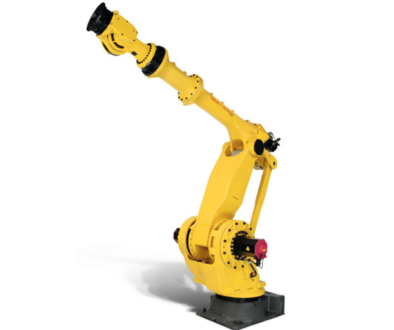
1. The FANUC M-410 Series: The Heavyweight Champion
The FANUC M-410 series remains the gold standard for dedicated palletizing. Designed specifically for this task, it features a four-axis articulated design that maximizes speed and stability. In the used market, the M-410iB and iC variants are highly sought after because their internal routing for cables and hoses significantly reduces wear and tear, ensuring that even a pre-owned unit has a long operational life ahead of it.
- Payload Capacity: Available in models ranging from 140kg to 700kg.
- Specialized Motion: The 4-axis design is optimized for keeping the gripper parallel to the floor at all times.
- Longevity: Known for a mean time between failures (MTBF) that leads the industry.
2. ABB IRB 660: Precision at High Speeds
When your palletizing line requires rapid-fire placement of smaller cases or bags, the ABB IRB 660 is the machine of choice. This robot is famous for its “FlexPalletizer” software, which allows for quick changeovers between different stacking patterns. For Ontario businesses handling diverse product lines, a used IRB 660 offers the agility needed to switch from a standard grocery stack to a complex interlocking pattern for heavy industrial goods in seconds.
- Reach: Boasts a 3.15-metre reach, allowing it to service two pallet stations simultaneously.
- Controller Compatibility: Easily integrates with the IRC5 controller for advanced motion control.
- Cycle Times: Capable of up to 1,500 cycles per hour with a 60kg payload.
3. Yaskawa Motoman MPL Series: The Versatile Workhorse
The “Master Palletizing” (MPL) series from Yaskawa is designed to be the ultimate flexible tool for end-of-line automation. These robots are particularly popular in the used market because of their robust build and the ease with which they can be re-programmed using the Motoman Smart Pendant. They are excellent for facilities that might need to move the robot between different lines as production demands shift throughout the year.
- Axis Flexibility: Offers 4 or 5-axis configurations depending on the complexity of the pallet pattern.
- Compact Base: Features a smaller footprint than many competitors, ideal for tight Brantford warehouse layouts.
- Hollow Arm Design: Protects internal wiring from the dusty environments common in grain or cement palletizing.
4. Collaborative Robots (Cobots): The Entry-Point for SMEs
In 2026, the used market for high-capacity cobots, such as the Universal Robots UR20 or the FANUC CR series, has matured significantly. These robots are perfect for palletizing applications where floor space is at a premium and safety fencing is not feasible. A used cobot allows human workers to operate safely in the same zone, handling “exception” tasks while the robot handles the heavy lifting of standard boxes.
- Safety First: Integrated force-sensing technology stops the robot instantly upon contact with a person.
- Ease of Setup: Can often be deployed in a single afternoon with no complex coding required.
- Portability: Many models can be mounted on mobile bases to service different areas of the warehouse.
5. High-Payload 6-Axis Robots: Beyond Simple Stacking
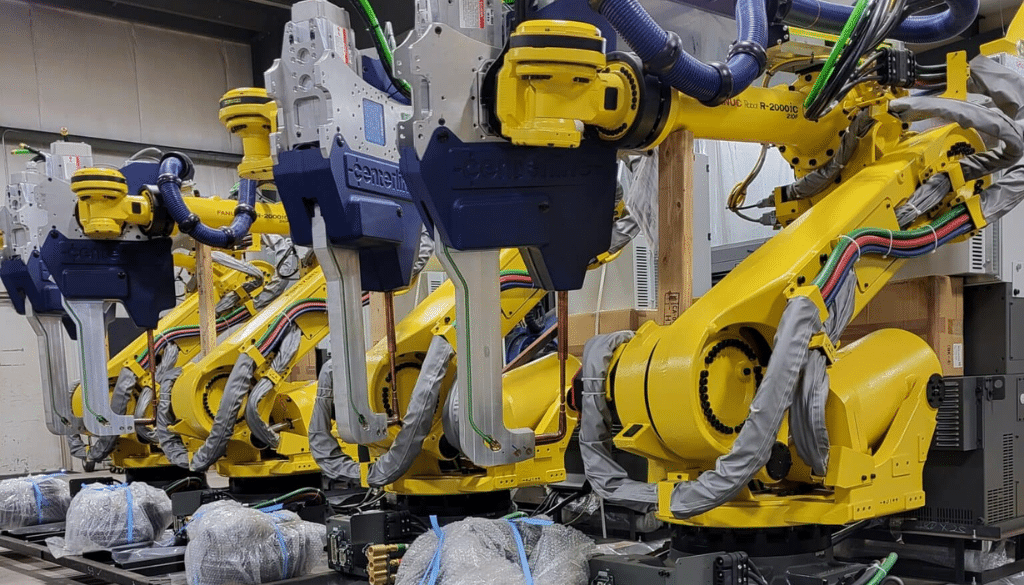
While 4-axis robots are the palletizing specialists, used 6-axis heavy lifters like the FANUC R-2000iC or the ABB IRB 6700 are increasingly used for “hybrid” palletizing. These robots can tilt, rotate, and manipulate items in ways a standard palletizer cannot. This is essential for warehouses that deal with irregular shapes, pails, or products that require specific orientation (like “this side up” electronics).
- Multi-Tasking: Can perform depalletizing and palletizing in the same cycle.
- Reach and Depth: The extra axes allow the robot to reach deep into bins or containers.
- Durability: Built for high-duty cycles in the automotive industry, making them overkill (in a good way) for palletizing.
6. The Importance of Refurbishment Standards
Buying “used” is only a smart move if the robot has been professionally refurbished. In 2026, the distinction between a “used” robot and a “refurbished” robot is critical. A quality refurbished unit from a Brantford-based specialist undergoes a multi-point inspection, including grease analysis, belt tensioning, and battery replacement. This ensures that the robot arrives at your facility ready to run for another 20,000 hours without a major overhaul.
- Testing: Every unit should undergo a 24-hour “run-off” test under load.
- Parts Availability: Reputable sellers ensure that spare parts for older models are stocked locally.
- Aesthetics: Professional cleaning and repainting help prevent rust and improve the warehouse environment.
7. End-of-Arm Tooling (EOAT) Customization
A robot is only as good as its hand. When purchasing a used palletizing robot, the savings on the arm often allow for a more sophisticated, custom-engineered vacuum or mechanical gripper. In 2026, we are seeing a rise in “smart grippers” that can detect if a box is damaged before it is placed on the pallet, preventing unstable loads from ever leaving the warehouse.
- Vacuum Grippers: Ideal for cardboard boxes and sealed bags.
- Mechanical Clamps: Better for heavy pails or crates that might slip in a vacuum.
- Hybrid Tooling: Combined tools that can handle both the product and the wooden pallet itself.
8. Integration with Warehouse Management Systems (WMS)
A used robot shouldn’t be an island. Modern integration techniques allow 2026-era WMS platforms to speak directly to older robotic controllers. By connecting your used palletizer to your inventory software, you can track throughput in real-time, predict maintenance needs, and automatically adjust stacking patterns based on the day’s shipping manifest.
- Data Tracking: Monitor “picks per minute” and “down-time” to identify bottlenecks.
- Remote Monitoring: Many refurbished units can be outfitted with IoT sensors for mobile alerts.
- Scalability: Allows the palletizer to be part of a larger, “dark warehouse” strategy.
9. Significant Cost Savings and ROI
The financial argument for used robots in Brantford is undeniable. While a new palletizing cell might cost $250,000 CAD and take a year to pay back, a used cell can often be installed for $120,000 CAD with a ROI of less than six months. This freed-up capital allows Ontario businesses to invest in other areas, such as conveyor systems or staff training.
- Depreciation: Much like a car, a robot loses a huge chunk of its value in the first two years; buying used lets the first owner take that hit.
- Incentives: Various Canadian government grants for automation apply equally to used equipment that improves productivity.
- Leasing Options: Many vendors now offer leasing for used equipment to further preserve cash flow.
10. Local Support and Training in Brantford
The biggest risk in automation isn’t the robot—it’s the lack of support. Sourcing used robots in Brantford means you have local experts who can be on-site within an hour if a problem arises. Furthermore, local training for your floor staff ensures they feel empowered by the new technology rather than threatened by it.
- Proximity: Minimize travel costs for technicians and speed up emergency repairs.
- Hands-on Training: Staff can visit the integrator’s facility to learn the system before it is installed.
- Community: Supporting local Ontario businesses strengthens the regional supply chain.
Conclusion
The move toward warehouse automation is a marathon, not a sprint. By choosing high-quality used palletizing robots, companies in Brantford and across Canada can gain a massive competitive advantage. These machines provide the consistency, safety, and speed required to meet the demands of 2026’s fast-paced market. Whether you choose the brute strength of a FANUC M-410 or the collaborative flexibility of a cobot, the key is to partner with a local expert who understands the nuances of refurbishment and integration. The future of your warehouse isn’t just automated—it’s smart, sustainable, and cost-effective.
Ready to Transform Your Warehouse?
At Robotics Research, we specialize in providing high-performance, refurbished robotic solutions tailored to the Canadian market. Our team in Brantford is ready to help you find the perfect palletizing system to boost your throughput and protect your bottom line.
Visit Us: 445 Hardy Road, Unit #2, Brantford, ON. N3V 5L8
Call Our Purchasing Team: (905) 565-1995
Email Us Your Robot’s Details: sales@roboticsresearch.com
Learn More on Our Website: https://roboticsresearch.com/
Frequently Asked Questions (FAQ)
-
A1: Cost and speed. Used robots typically cost 40% to 60% less than new models and are often available for immediate delivery, whereas new robots can have lead times of several months.