
A Buyer’s Checklist: What to Look for When You Buy Used Industrial Robots in Brantford
Premise
In Southwestern Ontario’s booming manufacturing corridor, Brantford has emerged as a premier industrial engine. As local food processing, automotive assembly, consumer goods, and metal fabrication facilities rapidly expand, automation is no longer a luxury—it is a competitive necessity. However, acquiring brand-new industrial robotics can impose severe capital constraints and long procurement lead times. Purchasing pre-owned industrial robots offers an agile, cost-effective alternative. This checklist provides Brantford plant managers, automation engineers, and procurement agents with a comprehensive roadmap to evaluate, inspect, and safely integrate used robotic assets while securing maximum return on investment.
Introduction
Brantford’s strategic proximity to major transportation arteries like Highway 403, combined with its rich industrial heritage, makes it a vital manufacturing hub in the Greater Golden Horseshoe. From automotive parts suppliers in the Northwest Industrial Park to packaging operations near Braneida, local facilities face constant pressure to increase throughput, enhance quality control, and combat labour shortages. Integrating industrial robotics is the most proven pathway to achieving operational excellence, yet the high capital expenditure associated with brand-new units can stifle growth for small and mid-sized enterprises.
Investing in used industrial robots bridges this financial gap, allowing business leaders to modernize their production lines at a fraction of the cost. However, the pre-owned robotics marketplace requires careful navigation. A bargain purchase can quickly deteriorate into an expensive operational liability if mechanical wear, outdated software, or missing safety compliance components are overlooked. To safeguard your capital and ensure seamless integration, buyers must conduct thorough due diligence. This buyer’s checklist outlines the ten critical areas every Brantford manufacturer must inspect when evaluating pre-owned industrial robotics.
1. Physical and Mechanical Wear Assessment
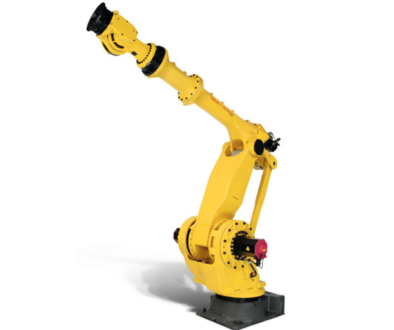
Before analyzing electronic components or software, a rigorous physical inspection of the robotic manipulator must be conducted. Industrial robots operating in demanding environments such as welding, foundry work, or heavy material handling are subjected to immense structural stresses, extreme temperatures, and mechanical friction. Examining the external structure, joints, and casting reveals how well the robot was maintained by its previous operator and highlights potential mechanical failures.
- Inspect casting structures for cracks, severe denting, structural repair welds, and check gearboxes, joint seals, and wrist assemblies for active lubricant or grease leaks.
2. Axis Backlash and Repeatability Verification
Precision is the hallmark of industrial automation, making axis repeatability one of the most critical mechanical performance metrics. Over hundreds of thousands of duty cycles, internal gear sets, harmonic drives, and timing belts experience friction that leads to mechanical backlash. Excessive backlash compromises the robot’s ability to return to accurate spatial coordinates, rendering it unsuitable for high-precision applications such as high-speed assembly, arc welding, or vision-guided picking.
- Request dial indicator measurements or laser tracker validation data for all six axes to verify that positional repeatability remains within the manufacturer’s original sub-millimetre tolerance specifications.
3. Controller Compatibility and Cabinet Condition
The robot arm is only as capable as the controller cabinet that directs its motion and handles communication. Purchasing a used robot with an obsolete controller architecture can severely restrict future system expansion, network integration, and spare parts availability. Furthermore, the interior of the controller cabinet must be inspected for thermal damage, dust accumulation, and improper electrical modifications made by former technicians.
- Inspect controller circuit boards for burnt components or trace corrosion, verify teach pendant screen responsiveness, and confirm supported industrial communication protocols like EtherNet/IP, PROFINET, or DeviceNet.
4. Internal Cabling and Harness Integrity
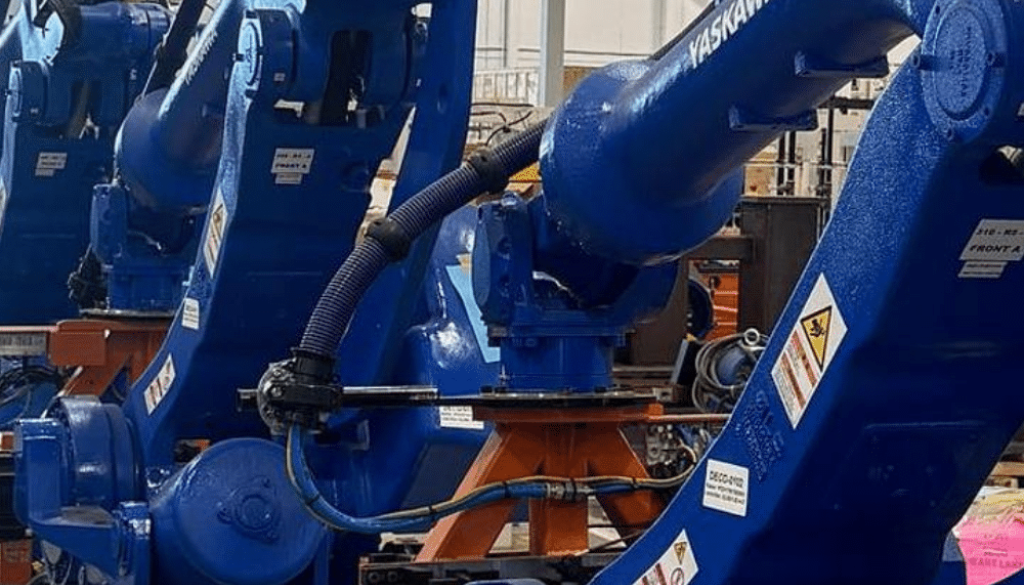
The internal dress pack and cabling harness carry critical power, feedback, and pneumatic signals through the articulated joints of the robot. Due to continuous torsional twisting and bending during high-speed operation, internal wires can fray, short-circuit, or suffer conductor fatigue. Replacing complete internal wiring harnesses is a labour-intensive procedure that can add unexpected costs to a pre-owned acquisition.
- Conduct continuity and insulation resistance tests on internal wire harnesses, checking joint flex points for broken shielding or degraded outer jacketing.
5. Operating Hours and Duty Cycle History
Similar to inspecting the odometer on a commercial transport truck, reviewing a robot’s total run hours and operational history provides valuable insight into remaining component life. However, duty cycle intensity is equally important; five thousand hours spent moving light foam packaging places significantly less wear on joint reducers than five thousand hours of high-impact spot welding or heavy palletizing at maximum payload capacity.
- Access the controller’s system diagnostic logs to review cumulative servo-on hours, operational history, alarm histories, and historical motor temperature logs.
6. Payload Capacity and Arm Reach Alignment
A common pitfall in the pre-owned robotics market is purchasing an asset based on price rather than technical alignment with the intended application. Every manufacturing cell requires a specific combination of payload capacity and spherical reach envelope. Factor in not only the weight of the raw workpiece, but also the total weight of end-of-arm tooling (EOAT), quick-change couplers, sensors, and utility lines to prevent overloading.
- Calculate total payload requirements—including EOAT, workpieces, and cabling—and map the target cell layout to ensure the robot’s working envelope reaches all pick-and-place coordinates without joint singularity.
7. Availability of Spare Parts and Local Technical Support
An industrial robot is an investment intended to operate reliably for years, but mechanical and electrical components will inevitably require maintenance. Before committing to a specific robot model or brand, Brantford manufacturers must evaluate the local supply chain for spare parts, replacement motors, drives, and specialized field service technicians across Southwestern Ontario.
- Verify that critical replacement parts like servo motors, drives, teach pendants, and gearboxes are readily available from Canadian distributors without extended international shipping delays.
8. Software Licensing and Controller Firmware
Navigating software licenses for pre-owned automation equipment requires careful attention. Robotic manufacturers often tie software licenses—including basic operating systems, motion control options, offline programming tools, and application packages—to the original corporate purchaser. Transferring ownership of a used robot may require purchasing new software licenses from the original equipment manufacturer (OEM).
- Clarify software license transfer policies with the OEM or vendor, ensuring the controller includes required application software packages like arc welding, palletizing, or vision systems.
9. Safety Compliance with Canadian Standards
Integrating industrial automation within Ontario requires strict adherence to provincial occupational health and safety regulations. Used robots imported from foreign jurisdictions or repurposed from older installations may lack modern safety features required under Canadian guidelines. Brantford facilities must ensure the robotic asset can be configured to comply with standard safety practices to protect workforce personnel and pass local Pre-Start Health and Safety Reviews (PSR).
- Ensure the robot controller supports functional safety modules, safe zone monitoring, dual-check safety systems, and emergency stop circuits compliant with CSA Z434 standards.
10. End-of-Arm Tooling and Application Flexibility
While used robots are frequently sold with custom end-of-arm tooling (EOAT) attached from their previous production deployment, this tooling may not fit your specific product geometry or manufacturing process. Evaluating how easily the wrist flange can accommodate standard ISO mounting plates, pneumatic lines, and electrical pass-throughs ensures smooth adaptation to your intended application.
- Assess wrist mounting flange standards, integrated pneumatic and electrical pass-through lines, and evaluate the feasibility of retrofitting standard or custom EOAT for your production needs.
Conclusion
Purchasing used industrial robots represents a highly effective, strategic strategy for Brantford manufacturers seeking to modernize facilities, increase operational capacity, and mitigate labour shortages without exceeding capital budgets. By systematically evaluating physical wear, repeatability, controller health, safety compliance, and spare parts availability, business leaders can confidently acquire pre-owned automation that yields years of reliable, high-margin productivity. Partnering with experienced automation specialists further streamlines this process, ensuring that every pre-owned robotic unit is thoroughly refurbished, tested, and tailored to meet the exact operational demands of Southwestern Ontario’s industrial sector.
Ready to Elevate Your Brantford Manufacturing Facility?
Robotics Research is your trusted partner for high-quality pre-owned industrial robotics, cell integration, field service, and automated solutions across Southwestern Ontario. Contact our expert team today to discuss your automation goals, request a quote, or schedule a facility consultation.
- Visit Us: 445 Hardy Road, Unit #2, Brantford, ON. N3V 5L8
Call Our Purchasing Team: (905) 565-1995
Email Us Your Robot’s Details: sales@roboticsresearch.com
Learn More on Our Website: https://roboticsresearch.com/
Frequently Asked Questions (FAQ)
-
A1: Buying used industrial robots provides significant cost savings—often 30% to 60% compared to new units—allowing facilities to achieve faster ROI. Additionally, used robots offer immediate availability, bypassing long lead times associated with ordering new equipment from overseas manufacturers.