

Choosing Your Next Workhorse: Should You Buy Used Industrial Robots from FANUC, ABB, or Yaskawa?
Premise
As automation becomes an operational mandate for Canadian small-to-medium enterprises (SMEs), purchasing pre-owned machinery offers an accessible financial entry point. However, the decision to buy used industrial robots involves much more than evaluating mechanical specifications or raw price tags; it demands a deep strategic assessment of the underlying manufacturer ecosystems. By critically comparing the secondary market availability, parts pipelines, legacy software support, and architectural differences of FANUC, ABB, and Yaskawa Motoman, this article establishes a technical framework for evaluating which brand’s “used iron” can be most seamlessly retrofitted with 2026 peripheral technologies to maximize return on investment (ROI).
Introduction
The factory floors of Canada are facing a quiet capital revolution. From the food packaging lines of the Maritimes to the high-density automotive corridors of Southwestern Ontario, manufacturers are finding that the traditional five-to-six-figure barriers for new automation systems are no longer necessary. The thriving global secondary market has transformed industrial robots into accessible, liquid assets. Yet, when companies set out to buy used industrial robots, they are frequently blinded by the physical asset itself—the robust cast-iron linkages, the heavy-duty servomotors, and the enticingly low price-per-kilogram of a used machine.
The real differentiator between a highly successful, high-ROI retrofit and an expensive, non-functional shop-floor ornament is almost never the physical arm; it is the ecosystem that surrounds it. In the used market, you do not merely buy hardware; you inherit a decade-long software lineage, a distinct parts distribution network, and a specific philosophy of controller architecture.
Three dominant global empires command the vast majority of the secondary industrial robotics landscape: FANUC, with its signature yellow arms and ubiquitous CNC heritage; ABB, renowned for its precision engineering, high-speed applications, and sophisticated software; and Yaskawa Motoman, celebrated for its rugged durability, advanced welding path-planning, and high-density multi-robot synchronization. Each brand presents a completely different balance of benefits and liabilities for the system integrator or retrofitter.
An older FANUC arm might boast unmatched parts availability in North America, but its software options can be heavily paywalled. A used ABB system may offer unparalleled path fidelity and flexible programming, but navigating its modern communication interfaces can require steep learning curves. Meanwhile, a vintage Yaskawa might run indefinitely with minimal mechanical failures, but bridging its proprietary communication buses into modern Ethernet networks requires specific engineering approaches.
This comprehensive guide breaks down the Big Three across ten critical architectural, financial, and logistical criteria, equipping Canadian operations with the technical insights needed to select their next automated workhorse.
1. Secondary Market Supply Volatility and Brand Liquidity
The baseline availability of pre-owned assets fluctuates dramatically across the Big Three, directly impacting procurement timelines and negotiation leverage when you look to buy used industrial robots. FANUC dominates the North American manufacturing base, particularly within the automotive tier-supply network, creating a massive, continuous influx of used arms into secondary liquidation channels. Yaskawa Motoman follows closely, with a dense footprint in structural metal fabrication and assembly, meaning used welding packages are highly liquid and easy to acquire. ABB, while globally massive, historically possesses a more targeted footprint in specific high-precision sectors within North America, such as consumer electronics, specialized plastics, and heavy paint lines. This variation means that while an asset manager can easily source dozens of identical used FANUC models for a multi-robot cell design, locating a matching fleet of specialized ABB arms on the pre-owned market requires significantly more lead time and a broader geographical sourcing network.
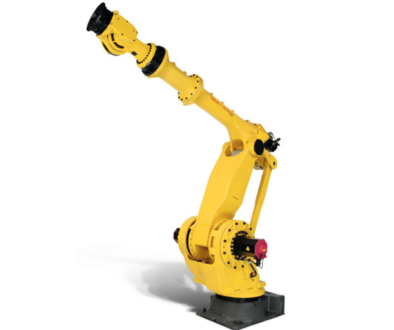
- Asset Liquidity & Volume Dynamics: FANUC arms (specifically the R-2000i and M-710i series) act as the “de facto currency” of the used market, ensuring highly stable pricing and transparent valuation metrics due to sheer transaction volumes.
- Sourcing Windows for Specialized Tooling: Procurement cycles for Yaskawa material handling systems are highly predictable and track closely with automotive factory retooling phases, while ABB used assets often appear unpredictably via isolated facility liquidations or bankruptcies.
- Fleet Standardization Feasibility: Standardizing a facility on a single pre-owned model line is highly feasible with FANUC or Yaskawa due to deep broker inventories, whereas attempting to buy a matching fleet of five or more used ABB units often forces integrators to pull from multiple secondary brokers, introducing varied operational histories.
- Geographical Imbalances: Used ABB inventory is deeply concentrated in European liquidations, meaning Canadian buyers must frequently factor in transatlantic freight costs and electrical compliance conversions, whereas FANUC and Yaskawa used assets are heavily concentrated in the midwestern United States and Southwestern Ontario.
2. Supply Chain Mechanics: Long-Term OEM and Third-Party Parts Availability
The total cost of ownership (TCO) of a used robot is directly governed by the accessibility, cost, and logistics of its replacement parts ecosystem. FANUC enforces a tightly controlled, highly protective component strategy; while original parts are widely available, OEM diagnostics and proprietary components are carefully managed to protect their authorized integrator networks. However, because of their massive market share, an expansive third-party gray market exists for FANUC parts, offering remanufactured encoders, teach pendants, and internal harnesses at deeply discounted prices. ABB takes a different approach, maintaining highly accessible international parts documentation, but their complex, high-performance European components can command significant price premiums and face longer lead times during global supply disruptions. Yaskawa Motoman occupies a balanced middle ground, maintaining excellent long-term warehouse support in North America for older legacy controllers, allowing facilities to source genuine parts for systems that are more than two decades old.
- OEM vs. Third-Party Part Disparity: FANUC installations enjoy the support of a multi-million dollar independent repair ecosystem, meaning a blown servo amplifier or worn wrist gear can be sourced from third-party rebuilders within 24 hours anywhere in Canada.
- Component Lead-Time Penalties: ABB components, such as specialized drive units or FlexPendant screens, are precision instruments that often require direct importation from European hubs if not stocked by Canadian corporate offices in Burlington, risking unexpected downtime.
- Legacy Support Windows: Yaskawa actively supports systems reaching back to the XRC and NX100 controller eras, providing factory-remanufactured parts and board repairs that keep older, mechanically sound assets functional long after competitors have declared similar generations obsolete.
- Consumable Standardization: Basic maintenance components like specialized lubricants, internal lithium batteries, and axis seals are readily reverse-engineered and mass-produced for FANUC systems, whereas ABB systems often require specific, specialized synthetic oils to avoid violating gearbox wear tolerances.
3. Software Licensing Ecosystems and the “Paywall” Dilemma
A significant pitfall when companies buy used industrial robots is the hidden software cost required to make a legacy asset functional in a modern 2026 environment. FANUC treats software options—such as socket messaging, advanced Ethernet/IP communication, or integrated vision—as modular, paid software options linked directly to an individual controller’s serial number. Transferring ownership of a used FANUC robot often requires a costly re-licensing fee from the OEM, and adding basic features can quickly erase any upfront purchase savings. Conversely, ABB’s RobotWare operating system offers a more integrated software suite; while advanced options still carry costs, their licensing structure is often friendlier to secondary market users. Yaskawa Motoman provides a highly functional base software package out of the box, where many standard communication functions and macro tools are inherently unlocked within the controller firmware, minimizing the risk of unexpected licensing expenses during commissioning.
- FANUC Re-licensing Financial Penalties: When a used FANUC controller arrives on site, unlocking a critical network option like R651 (EtherNet/IP Scanner) can require direct financial expenditure to the OEM for an authorized software load file, necessitating strict upfront checking of the robot’s current system software profile.
- ABB RobotWare Configuration Agility: ABB allows system integrators to use their robust RobotStudio software platform to easily configure, back up, and deploy operating system images, making it much simpler to restore or reconfigure a pre-owned controller without heavy OEM intervention.
- Yaskawa Unlocked Feature Parameters: Many older Yaskawa controllers require only the toggling of specific internal system parameters or CMOS settings to activate options like basic serial messaging or expanded I/O mapping, bypassed entirely without software purchase requests.
- Firmware Upgrade Trajectories: Upgrading a used controller’s core operating system to resolve security vulnerabilities or communication bugs is a highly restricted process for FANUC, whereas ABB and Yaskawa offer clearer paths for technical updates through authorized service channels.
4. Programming Paradigm Analysis: TP Code, RAPID, and INFORM III
The ease of deploying a used robot depends entirely on the programming language native to its controller generation, along with the availability of programmers who can write and debug the code. FANUC relies on Teach Pendant (TP) programming—a rigid, step-by-step menu-driven language that is highly linear but deeply understood by millions of technicians across North America. For complex logic, FANUC requires KAREL, a Pascal-like text language that must be compiled externally. ABB utilizes RAPID, universally considered one of the most powerful, flexible, and elegant text-based robotics languages in the world; RAPID allows for sophisticated mathematical operations, dynamic path corrections, and advanced structured programming directly on the controller. Yaskawa Motoman uses INFORM (evolving from INFORM II to INFORM III), an instruction-set language that combines the structural look of text with the deterministic simplicity of menu-driven inputs, making it incredibly efficient for high-speed material handling and path-heavy welding applications.
- Logic Complexity vs. Execution Accessibility: ABB’s RAPID language handles advanced calculations—such as dynamic vision offsets or adaptive sorting algorithms—natively and concisely within a single program file, whereas achieving the same result in FANUC requires splitting the task between linear TP files and background compiled KAREL programs.
- Technician Talent Pool Densities: Finding a field technician in Canada who can troubleshoot and modify basic FANUC TP code is exceptionally easy, keeping service costs competitive; finding an advanced ABB RAPID developer who understands complex asynchronous multi-tasking routines is rarer and commands higher engineering fees.
- INFORM III Operational Efficiency: Yaskawa’s INFORM language allows programmers to write highly compact loops and position-offset movements directly on the teach pendant, striking an excellent balance between the accessibility of a visual menu and the speed of a raw text language.
- Code Migration Portability: Migrating legacy code from an older pre-owned asset to a newer generation is relatively seamless in ABB and Yaskawa due to backward-compatible language design, while FANUC systems can encounter compilation and syntax errors when moving code across major controller generation shifts (e.g., R-J3iB to R-30iB).
5. System Interoperability and Network Integration Challenges
Modern material handling systems in 2026 rely heavily on real-time data exchange, meaning a used robot must seamlessly communicate with modern PLCs, edge computing devices, and smart peripheral sensors. Integrating a used ABB robot into an EtherNet/IP or Profinet environment is typically straightforward, as their controllers are built on open, modular computer architectures that readily accept standard network expansion cards. Yaskawa Motoman controllers feature robust, reliable internal register mappings that make integration with standard Allen-Bradley or Siemens PLCs highly predictable, provided you use the correct Electronic Data Sheet (EDS) device files. FANUC systems are exceptionally stable once integrated into an industrial network, but configuring their I/O mapping requires navigating older, non-intuitive software menus that demand precise knowledge of rack and slot allocations, which can complicate setup for inexperienced integrators.
- Industrial Ethernet Adaptability: ABB IRC5 and newer controllers feature dual Ethernet ports that can be easily split to handle isolated safety-bus communications on one port and standard plant-wide telemetry or OPC UA data streams on the other.
- EDS File Synchronization: Integrating an older Yaskawa NX100 or DX100 controller via EtherNet/IP requires sourcing specific legacy EDS files that match the controller’s exact firmware revision, a task that requires careful archiving and technical coordination.
- FANUC Rack/Slot I/O Mapping Complexity: Mapping discrete and group I/O in a used FANUC controller requires engineers to explicitly configure hardware memory allocations (e.g., assigning Rack 89, Slot 1 for EtherNet/IP communications), an older approach that lacks the modern convenience of automatic device discovery.
- Legacy Bus Phase-Out Management: When purchasing robots built in the early 2000s, both FANUC and Yaskawa often arrive with obsolete physical network cards like DeviceNet or Interbus; retrofitting these systems requires adding external, active protocol conversion gateways to bridge the legacy hardware to modern plant-wide networks.
6. Kinematic Engineering and Arm Profile Optimization
Every robot manufacturer approaches structural kinematics, joint limits, and casting configurations with a distinct engineering philosophy. When you buy used industrial robots for precise material handling, you must match these structural profiles to your specific spatial requirements. FANUC arms are highly valued for their compact wrist footprints and intentional structural rigidity, making them excellent choices for tight workcells where the robot must reach inside deep enclosures or machines without risking a body-to-structure collision. ABB designs arms with exceptional geometric flexibility and extended axis reach windows, allowing their robots to execute complex, inverted, or highly articulated paths that other brands cannot match without encountering kinematic singularities. Yaskawa Motoman positions its axis hinges to maximize speed and stability during high-frequency linear movements, which is why their arms are highly preferred for ultra-fast palletizing, case packing, and sorting lines.
- Wrist Clearance & Interference Geometry: FANUC’s hollow-wrist models (such as the ArcMate and specialized M-series variants) route dress packs internally through the center of Axis 6, eliminating external cable whipping and significantly reducing the cell’s physical interference footprint.
- Singularity Avoidance Capabilities: ABB’s motion control algorithms natively manage kinematic singularities (points where the robot’s joints align, causing computational errors) more fluidly than older generations of competitive controllers, ensuring smooth movement during complex continuous paths.
- High-Speed Axis Acceleration Layouts: Yaskawa optimizes the gear ratios and motor sizes of its J1, J2, and J3 base axes specifically to handle high-duty-cycle, repetitive back-and-forth strokes, allowing a used Yaskawa to deliver superior cycles per minute in standard pick-and-place workflows.
- Casting Durability and Sub-Zero Survival: For harsh material handling environments like refrigerated food storage or dusty agricultural packaging, FANUC’s specialized “FoundryPro” and ABB’s “CleanRoom” structural coatings are widely available on the secondary market, providing proven liquid and particulate protection.
7. Motion Control Calibration: Path Precision vs. Dynamic Acceleration
In material handling, path precision and dynamic acceleration profiles determine whether a system can successfully move a product without spilling contents, dropping fragile items, or causing premature mechanical fatigue. ABB is the industry leader in pure path accuracy, driven by their proprietary QuickMove and TrueMove software algorithms. These advanced systems calculate the exact physical forces, load inertias, and motor thermal limits in real time, allowing a used ABB arm to maintain precise path fidelity even at maximum operational velocities. FANUC counters with exceptional mechanical path predictability and robust, reliable braking systems that perform flawlessly under heavy, max-capacity loading. Yaskawa Motoman focuses heavily on aggressive acceleration ramping; their controllers excel at achieving top linear speed almost instantly, making them incredibly effective for rapid sorting tasks where the travel distance is short but execution speed is paramount.
- Real-Time Inertia Adaptation: ABB’s TrueMove technology ensures that even if a pre-owned arm is carrying a variable product weight, it maintains its exact pre-programmed path in space, preventing tool drifting during high-precision sorting tasks.
- Emergency Stop Brake Management: FANUC’s mechanical brakes are engineered for heavy-duty industrial survival; during a sudden power loss or E-stop event, they lock the arm in place instantly with minimal physical deflection, protecting surrounding cell structures.
- Acceleration Curve Tuning: Yaskawa’s INFORM software parameters allow engineers to customize acceleration and deceleration ramps for individual program steps, making it simple to optimize cycle times for specific, highly repetitive pick-and-place paths.
- Mechanical Vibrational Damping: Older used robots often exhibit small physical oscillations at the end of high-speed movements due to minor component wear; FANUC and Yaskawa controllers handle this effectively through software-defined tuning parameters that damp out these settling vibrations before the gripper releases the part.
8. Integrated Vision Ecosystems: Built-in Solutions vs. Open Integration
Vision guidance has become a non-negotiable requirement for modern 2026 material handling installations. FANUC offers a completely proprietary, deeply integrated hardware and software solution known as iRVision. Because iRVision is embedded directly into the main CPU motherboard of the robot controller, there is no need for an external computer; you simply plug an authorized camera straight into the controller cabinet, and setup takes place entirely via the standard teach pendant screens. ABB and Yaskawa take an open, hardware-agnostic approach to vision integration. While ABB offers Integrated Vision (powered by Cognex), both platforms are designed to readily interface with third-party, high-performance smart cameras and industrial PCs over high-speed networks, allowing integrators to select the best vision technology for their application.
- Embedded Processing Advantages: FANUC’s iRVision bypasses the network latencies and operating system instabilities that can plague external computer configurations, delivering highly reliable 2D and basic 3D part location data directly to the robot’s motion core.
- Advanced 2026 AI Vision Integration: For advanced material handling tasks requiring deep-learning classification or dense 3D point-cloud picking, ABB and Yaskawa’s open network protocols make it remarkably easy to stream real-time spatial coordinates straight from an external AI edge processor running custom neural networks.
- Hardware Sourcing Flexibility: If a vision component fails on a used ABB or Yaskawa system, you can easily source a standard industrial replacement camera from a local distributor; a failure within an older FANUC iRVision setup often requires tracking down a specific proprietary multiplexer board or camera assembly.
- Calibration Workflows: FANUC simplifies the setup process with automated grid-calibration routines directly on the teach pendant, whereas open architectures require engineers to manage coordinate data transformations across two separate software environments.
9. Controller Hardware Engineering and Shop Floor Footprints
When you buy used industrial robots, the physical design and condition of the controller cabinet are just as important as the mechanical arm. FANUC controllers (such as the R-J3iB, R-30iA, and R-30iB generations) are built like heavy-duty electrical enclosures, featuring clear physical separation between high-voltage drive components and low-voltage logic systems, which simplifies field maintenance. ABB’s IRC5 controllers are highly modular, designed around a compact, rack-mounted layout that allows the control modules to be stacked or tucked under conveyors to save valuable floor space. Yaskawa Motoman controllers (from the DX100 to the DX200) are celebrated for their exceptionally rugged, industrial-grade power supplies and electrical components, making them resilient to the voltage fluctuations and electrical noise commonly found in older manufacturing facilities.
- Modular Scaling Benefits: The ABB IRC5 controller architecture allows engineers to add an auxiliary drive module directly onto the main cabinet stack, making it simple to control a secondary linear rail or an external positioner axis without buying a completely new control system.
- Cabinet Ventilation & Filter Maintenance: FANUC controllers utilize closed-loop heat exchangers on their electronics cabinets, preventing contaminated shop air from reaching sensitive microchips, a design that ensures exceptional reliability in dusty or oily environments.
- Component Troubleshooting Accessibility: Yaskawa layouts place diagnostic test points and status LEDs directly on the faces of the main circuit boards, allowing maintenance technicians to quickly check system health and diagnose issues without using a digital multimeter.
- Teach Pendant Ergonomics: The ABB FlexPendant features a large, intuitive touchscreen interface that simplifies navigation, while older FANUC and Yaskawa pendants rely on rugged membrane keypads and smaller displays that require technicians to memorize deep text-menu hierarchies.
10. Fleet Standardization and Lifecycle Risk Management
The final strategic consideration when choosing your pre-owned workhorse is how your purchase aligns with your long-term plant-wide automation strategy and risk tolerance. Standardizing your facility on a single manufacturer brand dramatically lowers operational risks; it allows your maintenance teams to master a single software language, simplifies your spare parts inventory, and streamlines your training requirements. If your facility already runs a modern FANUC or Yaskawa environment, sticking with that brand on the used market is almost always the smartest economic decision, as your team can immediately apply their existing knowledge to the pre-owned machine. However, if you are building an entirely new automation cell from scratch, choosing a brand should be guided by a clear analysis of local technical support availability and the specific processing requirements of the application.
- Maintenance Cross-Training Optimization: Standardizing on a single brand ensures that your plant electricians can seamlessly transition from servicing a CNC machine to troubleshooting a used robotic arm, reducing diagnostic times and minimizing production delays.
- Tooling Commonality Savings: Maintaining a standardized fleet allows you to share expensive end-of-arm tooling, specialized calibration kits, and programming safety configurations across multiple cells, significantly lowering your overall automation costs.
- Lifecycle End-of-Life Planning: Before purchasing any used asset, always verify the manufacturer’s official support status for that specific controller generation to ensure you will not be left without critical firmware patches or component availability within the next five to ten years.
- Authorized Support Ecosystem Access: FANUC, ABB, and Yaskawa all maintain direct corporate field service offices in Canada; however, their response times and service policies for pre-owned equipment vary, making it essential to evaluate your local support infrastructure before finalized procurement.
Conclusion
The strategic analysis of the secondary industrial robotics market proves that selecting the ideal pre-owned workhorse requires a careful balance of mechanical specifications, software access, and long-term parts availability. FANUC remains an incredibly stable and reliable option for North American manufacturers due to the massive volume of used assets on the market and a deep third-party repair ecosystem, though buyers must carefully watch out for potential software re-licensing costs. ABB delivers unmatched programming flexibility and path precision, making it the premier choice for complex, high-accuracy applications, provided your team can manage its steeper software learning curves. Yaskawa Motoman stands out for its exceptional structural durability, open integration features, and excellent long-term support for legacy hardware, making it a highly reliable selection for demanding, high-speed workflows. By evaluating these key brand ecosystems against your facility’s technical capabilities, your team can confidently buy used industrial robots that will deliver long-term reliability and high ROI for years to come.
Partner with the Automation Integration Experts
Ready to add a reliable, cost-effective pre-owned robotic workhorse to your production line? Don’t navigate the complexities of secondary market software licensing, parts sourcing, or network compatibility alone. Our expert engineering team at Robotics Research has the specialized knowledge and deep experience required to evaluate, rebuild, and integrate used automation assets from FANUC, ABB, and Yaskawa into high-performance material handling systems customized for your facility.
Visit Us: 445 Hardy Road, Unit #2, Brantford, ON. N3V 5L8
Call Our Purchasing Team: (905) 565-1995
Email Us Your Robot’s Details: sales@roboticsresearch.com
Learn More on Our Website: https://roboticsresearch.com/
Frequently Asked Questions (FAQ)
-
A1: FANUC typically offers the most competitive TCO for standard applications due to the massive availability of affordable third-party parts and the large pool of qualified service technicians across Canada. However, if your application requires advanced software options or network interfaces that are not already unlocked on the used controller, Yaskawa Motoman can become more cost-effective because they do not impose the same restrictive software paywalls as other manufacturers.